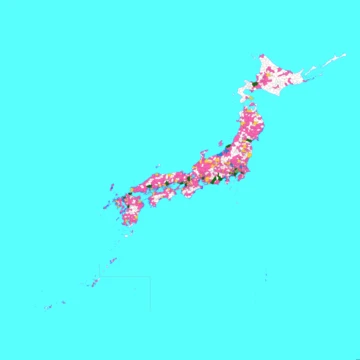
Hakodate

Hakodate is a city and port located in Oshima Subprefecture, Hokkaido, Japan, and serves as its capital. It used to be the most important port in northern Japan. The city is the fourth largest in Hokkaido after Sapporo, Asahikawa, and Obihiro.
Lore & Background
Hakodate was originally populated by the Ainu, and its name may derive from the Ainu word 'hak-casi' meaning 'shallow fort' or from the Japanese word for 'box' or 'building', referring to a castle built by the Kono clan in the fifteenth century. The port was surveyed by a fleet of five U.S. Perry. The Hakodate foreign settlement is a legacy of foreign influence. A mariner in Perry's fleet is sometimes claimed to be the first U.S. citizen buried in Japan, interred in Hakodate's cemetery for foreigners, but this claim is disputed and not universally accepted as established canon. The
Reader's Guide
Hakodate's significance lies in its role as Japan's first port opened to foreign trade, which made it a crucial point of contact between Japan and the outside world during the mid-19th century. This opening, following the Convention of Kanagawa, initiated a period of foreign influence that left lasting legacies such as the Hakodate foreign settlement, consulates, and the introduction of Eastern Orthodox Christianity. The city was also a central stage in the Boshin War, serving as the base for the short-lived Republic of Ezo and the site of the Naval Battle of Hakodate, which marked the end of Tokugawa resistance. The Goryōkoku fort, now a public park, remains a symbol of this era. Today, Hakodate is the third-largest city in Hokkaido and a historical reference point for Japan's modernization and foreign relations.
Did You Know?
- A mariner in Commodore Perry's fleet is sometimes claimed to be the first U.S. citizen buried in Japan, interred in Hakodate's cemetery for foreigners, but this claim is disputed and not universally accepted as establish
Ainu Roots and the Kono Clan's Founding
Hakodate's story begins long before it became a port city. But the Kono family's hold was fragile. The Oshima Peninsula was a zone of persistent low-level conflict, where armed merchant families like the Kono set up bases to control regional trade.
Gateway to the World
When Commodore Matthew C. Perry's fleet of five U.S. The consequences were immediate and layered. A mariner from Perry's own fleet died during the visit and became the first American citizen interred in Japan, buried in Hakodate's cemetery for foreigners. A cluster of historical missionary churches — Orthodox, Anglican, and Catholic — still stands as a visible reminder of that era of foreign presence.
The Republic of Ezo and the Battle for the Fort
Hakodate became the dramatic stage for one of Japan's most consequential conflicts. On December 25 of that year, they formally proclaimed the Republic of Ezo, attempting to secure international recognition by appealing to the American, French, and Russian legations already stationed in Hakodate. The rebels made their stand from Goryōkaku, the city's distinctive European-style star fort, using it as the center of their southern Hokkaido defenses. Military leader Hijikata Toshizō was among those killed in the fighting. The city and its fort were surrendered to the Emperor.
Fire, War, and Enduring Identity
Hakodate's modern identity has been shaped as much by catastrophe as by achievement. The city had been the largest in Hokkaido before that disaster. During World War II, Hakodate largely escaped the bombing that ravaged other Japanese cities, but the area around Hakodate-yama was heavily fortified and closed to civilians. Historians record ten prisoner-of-war camps in the region. Its layered past — Ainu, feudal, Meiji, and modern — remains woven into its streets, its port, and its identity as the capital of Oshima Subprefecture.
Frequently Asked Questions
Who is Hakodate?
Hakodate is a port city on the southern coast of Hokkaido, Japan, acting as the capital of Oshima Subprefecture. It is the fourth-largest city in Hokkaido, trailing only Sapporo, Asahikawa, and Obihiro.
More in Japanese Cities 1-23
Spotted an error? Know more?
This is a living reference — every entry is fact-audited, and reader corrections feed straight into our audit queue. Suggest an edit · See this site's audit record